
Introduction
Hundreds of thousands of veterans are waiting months—or longer—for disability compensation decisions they've already earned through their service. While the VA has made measurable progress reducing its backlog, the system still faces significant structural challenges that delay benefits and create financial hardship for those who served.
This article covers the current state of the VA claims backlog, the key causes of processing delays, how the VA is using technology to improve efficiency, and what veterans can do right now to protect their claims and reduce unnecessary wait times.
TLDR
- The VA reduced its backlog to under 100,000 claims in February 2026—the first time below that threshold since 2020
- Major delay causes include unnecessary medical exams, incomplete record reviews, staff turnover, and software failures
- AI tools like Automated Decision Support are helping speed processing, but most remain in pre-deployment
- Fast decisions don't help if they're wrong—incorrect claims lead to denials, appeals, and years of additional waiting
- Veterans can reduce delays by working with accredited service officers and submitting thorough documentation upfront
Where the VA Claims Backlog Stands Today
Understanding the Backlog
The VA officially defines a "backlogged" claim as one pending more than 125 days without a decision. This distinguishes backlogged claims from the broader category of all pending claims, which includes those still within the standard processing window.
As of January 2025, 264,717 claims were backlogged. By February 2026, the VA reduced that number to under 100,000—a 60%+ reduction in roughly one year and the first time below 100,000 since 2020. At its peak in March 2013, the backlog reached 611,000 claims.
Record Processing Volume
The VA processed an all-time high of 3,001,734 disability claims in fiscal year 2025, shattering the prior record of 2.49 million in FY24.
On May 29, 2025, the VA set a single-day record of 15,364 claims processed—a milestone achieved through workforce expansion, productivity improvements, and technology adoption.
Key processing improvements include:
- 15.6% increase in claims received compared to prior year
- 35 days with 10,000+ daily completions in FY24 (prior to FY24, only three days in VA history exceeded 9,000)
- Record single-day processing of 15,364 claims on May 29, 2025
PACT Act Impact
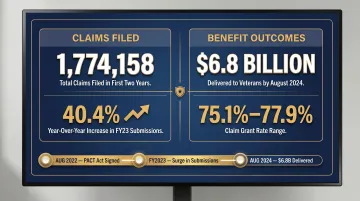
The PACT Act of 2022 significantly expanded eligibility for toxic-exposed veterans, creating a surge in new applications. In the first two years after signing, veterans filed 1,774,158 PACT Act claims—representing a 40.4% year-over-year increase in total submissions during FY23.
The VA delivered $6.8 billion in PACT Act benefits by August 2024, with grant rates ranging from 75.1% to 77.9%.
What's Still at Stake
Even with progress, hundreds of thousands of veterans still have claims pending. Each month of delay represents real financial hardship.
For a veteran rated at 100% disability, each month of processing delay represents $3,938 in foregone compensation. Even a veteran at 50% loses over $1,135 per month.
While the VA pays retroactively to the effective date, veterans must manage without this income during the waiting period.
Why VA Claims Get Delayed: The Root Causes
Claims Overdevelopment
Overdeveloping a claim—ordering unnecessary medical examinations or seeking additional opinions when presumptive service connection already applies—is one of the most common causes of delay.
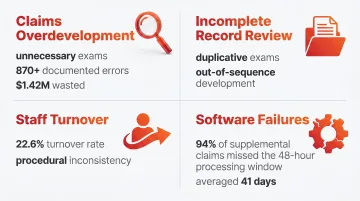
A VA Office of Inspector General report documented 870+ potential errors where staff ordered unnecessary exams for PACT Act presumptive conditions, wasting $1.42 million and delaying veterans. The report found that claims processors requested unwarranted medical examinations for conditions the PACT Act already presumes are service-connected.
Example: If a veteran has documented toxic exposure and COPD is a presumptive condition, a VA examiner should not order additional exams to explore other potential causes. Presumptive service connection eliminates that need entirely.
Incomplete Record Review
Claims processors sometimes focus only on the first contention in a file rather than reviewing the full record. This creates:
- Duplicative examinations
- Out-of-sequence development
- Disjointed claims processing
- Unnecessary delays when evidence already exists in the file
Training Gaps and Staff Turnover
The VA faces high turnover among claims processing staff. One VA operations center experienced a 22.6% employee turnover rate from October 2023 through June 2024. High turnover creates:
- Procedural inconsistency
- Processing errors that trigger deferrals
- Claims returns or outright denials
- Staff who feel underprepared for complex PACT Act claims
Many staff rely on passive online training modules rather than scenario-based instruction, resulting in knowledge gaps when handling nuanced cases.
Automated Tool Failures
The VA's Veterans Benefits Management System (VBMS) experienced significant performance degradation in 2024. An OIG report found that 94% of supplemental claims in 2022 failed the 48-hour establishment window, averaging 41 days instead.
When the VA decides a claim while relevant evidence is stuck in processing, veterans must file appeals. Resolution can take years. Software synchronization issues delayed automatic establishment of supplemental claims, creating a backlog more than four times greater than claims actually established.
How AI and Technology Are Transforming Claims Processing
Automated Decision Support (ADS)
ADS uses machine learning to automate time-consuming upfront development tasks, including:
- Retrieving medical records
- Gathering military service records
- Compiling relevant medical data into summary documents
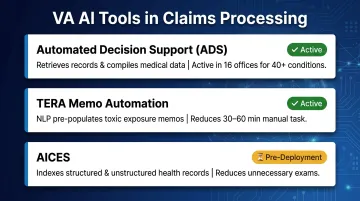
ADS currently assists with more than 40 disability conditions across 16 benefits offices. The VA plans to expand ADS to cover more types of conditions and claims, increasing the percentage eligible for automated processing.
The system is designed to assist trained claims processors, not replace them. Human decision-making remains the final authority on every claim.
TERA Memo Automation
The VA uses natural language processing to pre-populate Toxic Exposure Risk Activity (TERA) memos required for PACT Act claims. Manual completion takes 30 to 60 minutes per memo. Automation streamlines this significantly while maintaining accuracy.
This tool speeds eligibility verification for PACT Act claims without compromising the integrity of the review.
Emerging Agentic AI Tools
Beyond document automation, the VA is testing tools that analyze existing records more comprehensively. AICES is a pre-deployment tool that indexes structured and unstructured veteran health and service records to support claims adjudication. Its goal is reducing unnecessary in-person exams by leveraging existing clinical evidence more effectively. The VA maintains 367 AI use cases total, with 28 focused specifically on government benefits processing.
Limitations and Ongoing Challenges
These AI tools have clear limitations. Current challenges include:
- Most AI tools remain in pre-deployment status
- AI struggles to accurately interpret handwritten information on VA forms (e.g., VA Form 526)
- Technology improvements must be paired with quality control measures and staff training
- The OIG's own recommendation to "develop decision support tools" indicates current automation is insufficient to prevent documented processing errors
What Veterans Can Do to Protect Their Claims
File Completely and Accurately From the Start
A well-developed claim dramatically reduces the chance of unnecessary development, deferrals, or denials. Key elements include:
- Thorough documentation of service history
- Correct medical evidence linking conditions to service
- Clearly stated service connections
- Supporting lay statements when appropriate
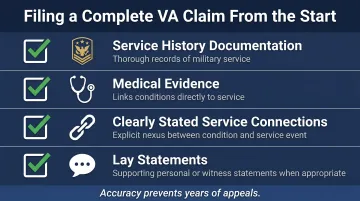
Getting it right the first time prevents years of appeals. Speed matters less than accuracy.
The VA's 12-month claims processing accuracy rate reached 93.5% in September 2025, up from 91.6% in October 2024—but that still means approximately 6.5% of claims contain errors.
Work With an Accredited Veterans Service Officer
VSOs from organizations like DAV, American Legion, and VFW help veterans:
- Identify all eligible conditions
- Gather proper evidence
- Frame claims correctly under VA regulations
- Navigate complex PACT Act or multi-condition claims
Accredited representatives understand both VA regulations and how those rules are applied in practice. This distinction matters when navigating presumptive service connections or secondary conditions.
Understand Presumptive Service Connections
Beyond working with a VSO, research which conditions are presumptively connected to your service. For veterans exposed to burn pits, Agent Orange, or other toxic substances under the PACT Act, understanding presumptives eliminates the need for certain medical opinions.
PACT Act presumptive conditions include:
Cancers:
- Brain cancer
- Gastrointestinal cancer
- Glioblastoma
- Head/neck cancer
- Lymphoma
- Melanoma
- Pancreatic cancer
- Respiratory cancer
Non-cancer illnesses:
- Asthma (diagnosed after service)
- Chronic bronchitis
- COPD
- Chronic rhinitis
- Chronic sinusitis
- Emphysema
- Interstitial lung disease
- Pulmonary fibrosis
Understanding presumptives reduces the risk of overdevelopment working against your timeline.
Speed Isn't Enough: Why Accuracy in VA Claims Processing Matters
Faster decisions are welcome, but a claim decided quickly and incorrectly is still a denial of justice.
Veterans who receive incorrect decisions face confusion, potential benefit reductions, and the burden of appeal—a process that can take months or years.
The Cost of Errors
Board of Veterans' Appeals (BVA) wait times remain severe:
- Average days pending decreased from 640+ days (March 2024) to approximately 500 days (December 2024)
- Completed cases averaged 722 days
- Evidence submission docket: projected 1.5 years
- Hearing docket: projected 2 years
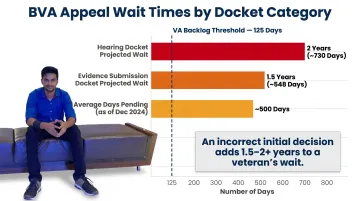
An incorrect initial decision that leads to a BVA appeal adds 1.5 to 2+ years to a veteran's wait—far exceeding the original backlog delay.
Accuracy Is Critical for Complex Claims
Accuracy matters especially for claims involving:
- Multiple conditions
- Secondary service connections
- Toxic exposures under the PACT Act
- Evolving evidence and inconsistently applied guidance at the field level
The VA's push for record processing throughput must be balanced with quality control. The OIG documented systemic overdevelopment errors in PACT Act claims at the same time the VA achieved record processing volume—suggesting speed and quality remain in tension.
Protecting What You've Earned
The same principle that drives VA claims accuracy—protecting what you've rightfully earned—applies to veteran-owned businesses in the home service industry.
For veteran-owned contractors, WarrantyRE's reinsurance solutions help business owners capture warranty profits rather than leaving them with third-party providers. The administrator-obligor reinsurance structure includes:
- Own your warranty company outright
- Collect warranty fees built into job pricing
- Retain unused funds as profit
- Eliminate payments to third-party warranty providers
This model mirrors the VA claims process: claiming what you're owed and protecting what you've earned through your work.
Frequently Asked Questions
What is the VA claims backlog and how is it measured?
The backlog includes disability compensation and pension claims pending over 125 days without decision. The VA reports these figures monthly at benefits.va.gov/reports.
How much will 100% VA disability be in 2026?
The 2026 rate for 100% disability is $3,938.58 per month (veteran alone), effective December 1, 2025. Rates adjust annually via COLA increases—check va.gov/disability/compensation-rates for current figures.
Is the VA still processing claims during the shutdown?
Yes, disability claims processing continues as an essential function with 97% of VA employees working. Benefits are delivered uninterrupted, though delays may occur depending on shutdown duration—check VA.gov for updates.
Why were my VA benefits reduced?
Common reasons include re-evaluation showing improvement, rating error correction, or income/circumstance changes. You can appeal any reduction through the VA decision review process.
What is claims overdevelopment and how does it delay a veteran's benefits?
Overdevelopment is when the VA orders unnecessary exams or evidence beyond what's needed, especially for presumptive conditions. A VA OIG report found 870+ such cases for PACT Act claims, adding weeks to months of delays.